



AT THE HELM
Dr. SK BOSE
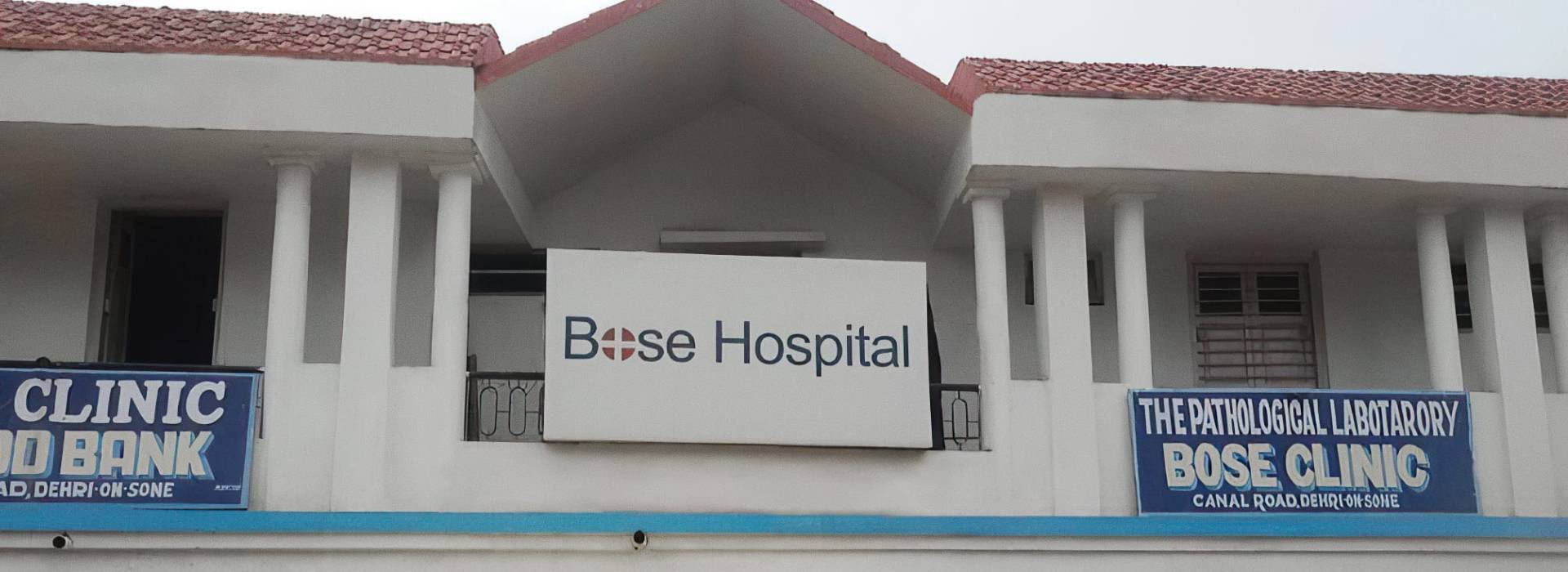
Dr. Sunil Kumar Bose M.B.B.S., F.R.C.S. (London), F.R.C.S. (Edinburgh), is the visionary who took over the reins of Bose Clinic in 1967 from his Father and Founder of Bose Clinic, Late Dr. R.N. Bose, when he moved back to India from the United Kingdom. Prior to this, Dr. Sunil Kumar Bose worked in various hospitals across the United Kingdom and was the first Indian to be elected in the Nuffield Kidney Transplant Unit in a coveted post at Edinburgh, Scotland.
Dr Sunil Kumar Bose, is best described as a compassionate humanitarian, who has dedicated his life to bringing world-class healthcare within the economic and geographic reach of millions around Dehri On Sone. Under his leadership, guidance and foresight, Bose Clinic has developed into the world class hospital it is today.
As a recognition of his philanthropic work and services rendered to the people of Bihar, Dr Sunil Bose has been conferred with many awards/recognitions including the Magadh Ratna award. Today, at 90+ years of age, Dr Bose visits the OPD at Bose Clinic every morning and evening. His dedication to his work and service stands resilient to this day.

Dr. Sunil Kumar Bose
M.B.B.S., F.R.C.S. (London), F.R.C.S. (Edinburgh),
Prevention Guidelines
The best healthcare is preventive healthcare. When conditions are caught quickly and treated appropriately, or prevented entirely, you can stay healthier and spend less on healthcare. These are some guidelines to help you achieve the best outcomes for your health.
The goal is to find a disease early so lifestyle changes can be made and you can be watched more closely to lower the risk of disease, or to find it early enough to treat it most effectively.
Type 2 diabetes or prediabetes | All adults starting at age 45 and adults with no symptoms at any age who are overweight or obese and have 1 or more additional risk factors for diabetes | At least every 3 years |
Blood pressure | All adults | Yearly checkup if your blood pressure is normal.
|
Breast cancer | All women | Screening with a mammogram every year is an option starting at age 40. |
Cervical cancer | All women, except those who had a hysterectomy (with removal of the cervix) for reasons not related to cervical cancer and no history of cervical cancer or serious precancer | Women between the ages of 30 and 65 should have a Pap test plus an HPV test (called “co-testing”) every 5 years. This is the preferred approach. But it is also acceptable to continue to have Pap tests alone every 3 years. |
Colorectal cancer | Women of average risk ages 45 years and older | Several tests are available and used at different times. Tests include:
|
Gonorrhea | Sexually active women at a higher risk for infection | At routine exams if at risk |
Hepatitis C | Adults at a higher risk; 1 time for those born between 1945 and 1965 | At routine exams if at risk |
Lipid disorders | All women age 45 and older at a higher risk for coronary artery disease For women ages 19 to 44, screening should be based on risk factors; talk with your healthcare provider | At least every 5 years |
Syphilis | Women at a higher risk for infection | At routine exams if at risk |
Vision | All adults | Baseline comprehensive exam at age 40 |
Screening test is done to find possible health problems or diseases in people who don’t have any symptoms. The goal is to find a disease early so lifestyle changes can be made and you can be watched more closely to lower the risk of disease, or to find it early enough to treat it most effectively.
Type 2 diabetes or prediabetes | All adults starting at age 45 and adults without symptoms at any age who are overweight or obese and have 1 or more additional risk factors for diabetes | At least every 3 years |
Blood pressure | All adults | Yearly checkup if your blood pressure is normal.
|
Breast cancer | All women2 | Yearly mammogram should be done until age 54. At age 55, switch to mammograms every other year. |
Cervical cancer | All women, except those who have had a hysterectomy with removal of the cervix for reasons not related to cervical cancer and have no history of cervical cancer or serious precancer | Pap test every 3 years or Pap test with human papillomavirus (HPV) test every 5 years |
Chlamydia | Women at a higher risk for infection | At routine exams |
Colorectal cancer | All women of average risk in this age group | For tests that find polyps and cancer:
For tests that primarily find cancer:
|
Gonorrhea | Sexually active women at a higher risk for infection | At routine exams if at risk |
Hepatitis C | Adults at a higher risk; 1 time for those born between 1945 and 1965 | At routine exams if at risk |
High cholesterol and triglycerides | All women ages 45 and older at a higher risk for coronary artery disease | At least every 5 years |
Lung cancer | Adults age 55 to 80 who have smoked | Yearly screening in smokers with 30-pack per year history of smoking or who quits within 15 years |
Osteoporosis, postmenopausal women | Women at age 60 who are at a higher risk for fractures caused by osteoporosis | Check with your health care provider |
Syphilis | Adults at a higher risk for infection | At routine exams if at risk |
Vision | All adults | Check with your healthcare provider for exam frequency. |
For men within age of 40 to 49 need to do a screening test to find possible disorders or diseases in people who don’t have any symptoms. The goal is to find a disease early so lifestyle changes can be made and you can be watched more closely to reduce the risk of disease, or to detect it early enough to treat it most effectively.
Blood pressure | All adults | Yearly checkup if your blood pressure is normal |
Type 2 diabetes or prediabetes | All men beginning at age 45 and men without symptoms at any age who are overweight or obese and have 1 or more additional risk factors for diabetes | At least every 3 years (annually if blood sugar is already rising) |
Type 2 diabetes | All men with prediabetes | Every year |
Hepatitis C | Anyone at increased risk | At routine exams |
High cholesterol and triglycerides | All men ages 35 and older, and younger men at high risk for coronary artery disease | At least every 5 years |
Prostate cancer | Starting at age 45 | At routine exams |
Colorectal cancer | Men of average risk ages 45 and older | Several tests are available and used at different times. Tests include:
|
Syphilis | Anyone at increased risk for infection | At routine exams |
Here are the screening tests that most men ages 50 onwards need. A screening test is done to find possible disorders or diseases in people who don’t have any symptoms. The goal is to find a disease early so lifestyle changes can be made and you can be watched more closely to reduce the risk of disease, or to detect it early enough to treat it most effectively.
Blood pressure | All adults | Yearly checkup if your blood pressure is normal |
Colorectal cancer | All men of average risk in this age group | Several tests are available and used at different times. For tests that find polyps and cancer:
For tests that primarily find cancer:
|
Type 2 diabetes or prediabetes | All men beginning at age 45 and men without symptoms at any age who are overweight or obese and have 1 or more additional risk factors for diabetes | At least every 3 years |
Type 2 diabetes | All men with prediabetes | Every year |
Hepatitis C | Men at increased risk for infection – talk with your healthcare provider | At routine exams (All men age 50 to 70 should be tested once for hepatitis C.) |
High cholesterol and triglycerides | All adults | At least every 5 years |
Lung cancer | Adults age 55 to 80 who have smoked | Yearly screening in smokers with 30 pack-year history of smoking or who quit within 15 years |
Prostate cancer | Starting at age 45 | At routine exams |
Syphilis | Anyone at increased risk for infection | At routine exams |
Vision | All adults3 | Check with your healthcare provider for exam frequency |
Disclaimer: These are basic and generalized guidelines to help you lead a healthier life and for the prevention of diseases. In no way does this replace the consultation or advice of a licensed and qualified medical practitioner. You are you hereby advised to consult with your physician or other health-care professional prior to making any decisions, taking or not taking any actions related to any health care problem or issue you might have at any time, now or in the future. Bose Clinic, Bose Diagnostic Centre or any of the practicing medical professionals at Bose Clinic or at Bose Diagnostic Centre are not in any way responsible or liable for your personal healthcare decision taken by you or in conjunction with any medical practitioner. Health research, diagnosis and treatment of health disorders are constantly changing and you should be aware that the information contained on this Web site, or on any health care website may be outdated, incomplete or incorrect.

Address
Canal Road, Dehri on Sone, District- Rohtas Bihar
Email Us
contact@bosehospital.com, info@boseclinic.co.in